Living Room Layout Planning: Stop Guessing, Start Measuring
Struggling with a living room that feels cramped or awkward? The secret isn't buying expensive new furniture; it's mastering your floor plan. Discover practical, designer-approved layout strategies to transform your space and avoid costly mistakes.
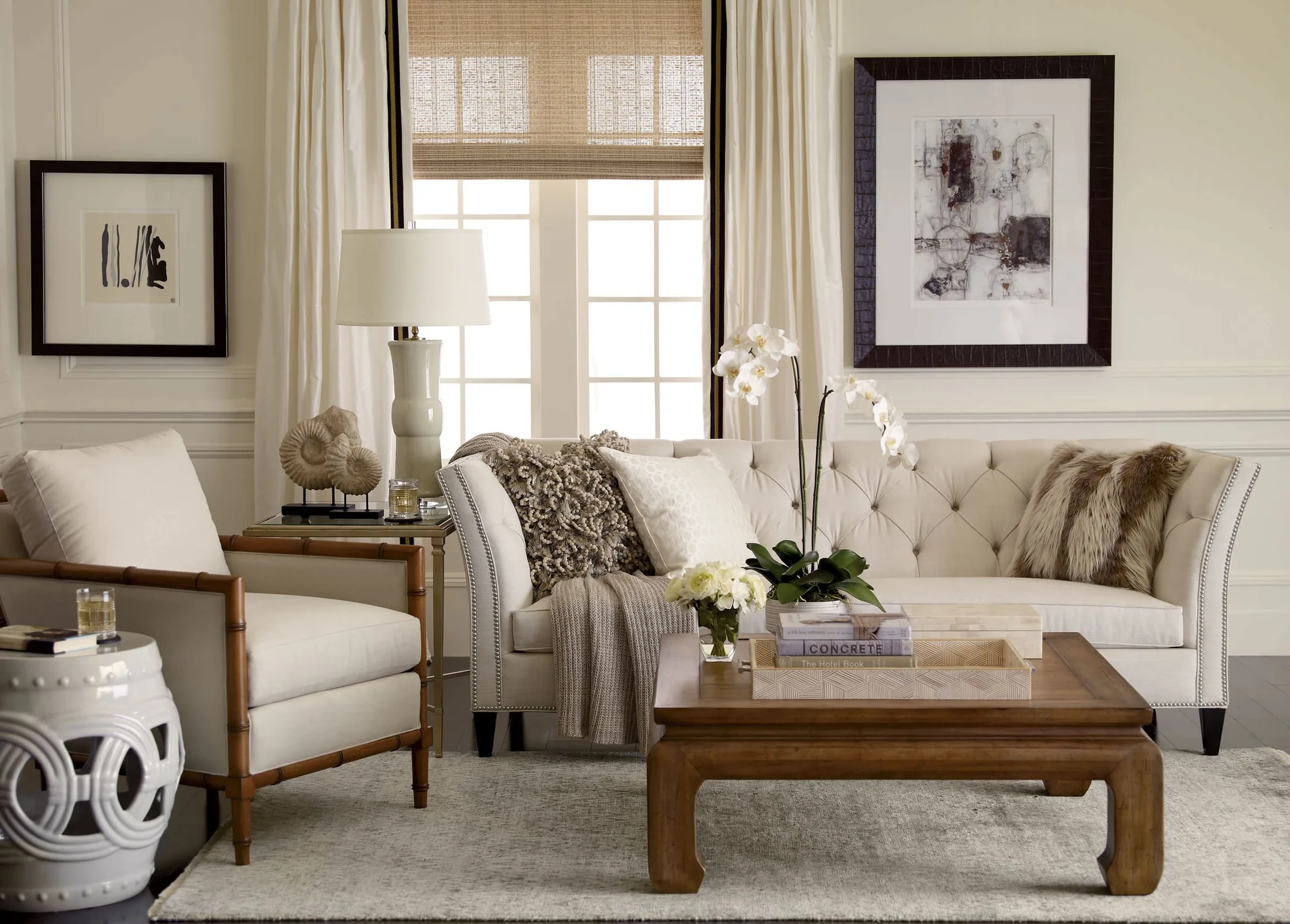
You finally found the perfect sofa. You waited weeks for delivery, carefully unboxed it, and pushed it exactly where you thought it belonged, right against the longest wall. But when you step back, something feels entirely wrong. The room feels smaller, the TV is awkwardly far away, and walking to the balcony suddenly feels like navigating an obstacle course. If this sounds familiar, you are not alone.
The frustration of a room that just doesn’t “work” rarely comes down to your taste in décor. Almost always, the culprit is poor living room layout planning we can solve this with affordable interior design by Decozie. When we guess where furniture should go without understanding the geometry of the room, even the most expensive pieces will look out of place and function poorly.
In this comprehensive guide, we are taking a designer’s approach to space optimization. It is time to stop buying furniture based on guesswork and start measuring for success.
Why Your Floor Plan Dictates Your Comfort - Decozie
In real life, your living room is a machine for living. It’s where you host friends, binge-watch your favorite shows, take afternoon naps, and unwind after a long day of work. If the layout is broken, the machine simply doesn’t work. Good interior design isn’t just about aesthetics; it is fundamentally about spatial mathematics.
When you do not prioritize your layout, you end up making reactionary, emotional purchases. You might buy a rug that is far too small, a coffee table you keep bumping your shins on, or an armchair that completely blocks a doorway. These aren’t just minor visual annoyances they are costly mistakes that impact your daily life.
By mastering living room layout planning before you even open your wallet, you save yourself the headache of return shipping fees, the regret of mismatched proportions, and the daily frustration of an awkward living space. A thoughtful plan protects your budget and guarantees a designer-level transformation.
Map the Invisible Paths: Understanding Traffic Flow
Before you even think about placing a sofa or hanging a piece of art, you need to understand how people actually move through the room. Think of traffic flow as the invisible highways of your home. If you place a roadblock on a highway, traffic jams occur. The same happens in your living room.
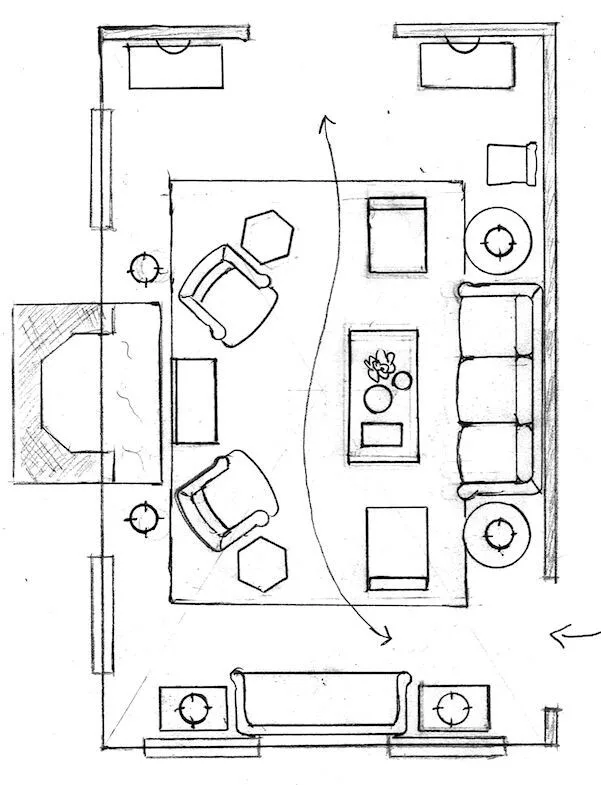
To optimize your room flow, keep these professional spacing rules in mind:
- Identify the entry and exit points: Draw a mental line (or use a piece of paper) between all doors, arches, and major pathways leading to other rooms.
- Leave necessary breathing room: A functional major pathway needs to be at least 30 to 36 inches wide. Anything less, and you will find yourself constantly squeezing past furniture or walking sideways.
- Maintain coffee table clearance: Allow 14 to 18 inches of space between your sofa and your coffee table. This is the sweet spot: close enough to reach your drink comfortably, but wide enough to walk through without bruising your legs.
- Avoid the “runway” effect: Do not force traffic to cross directly between your main seating area and your television. Route the traffic around the conversational zone.
Key Tip: Use painter’s tape on your floor to outline the exact dimensions of the furniture you want to buy. Walk around the tape for a few days to see if the natural flow of the room feels restricted before you make a purchase.
The Float Technique: Stop Pushing Furniture Against Walls
There is a widespread misconception in DIY design that pushing all your furniture flat against the walls creates a larger room. In reality, it does the exact opposite. It creates a vast, unusable, and awkward empty space in the middle of the room, while simultaneously pushing conversational seating too far apart.
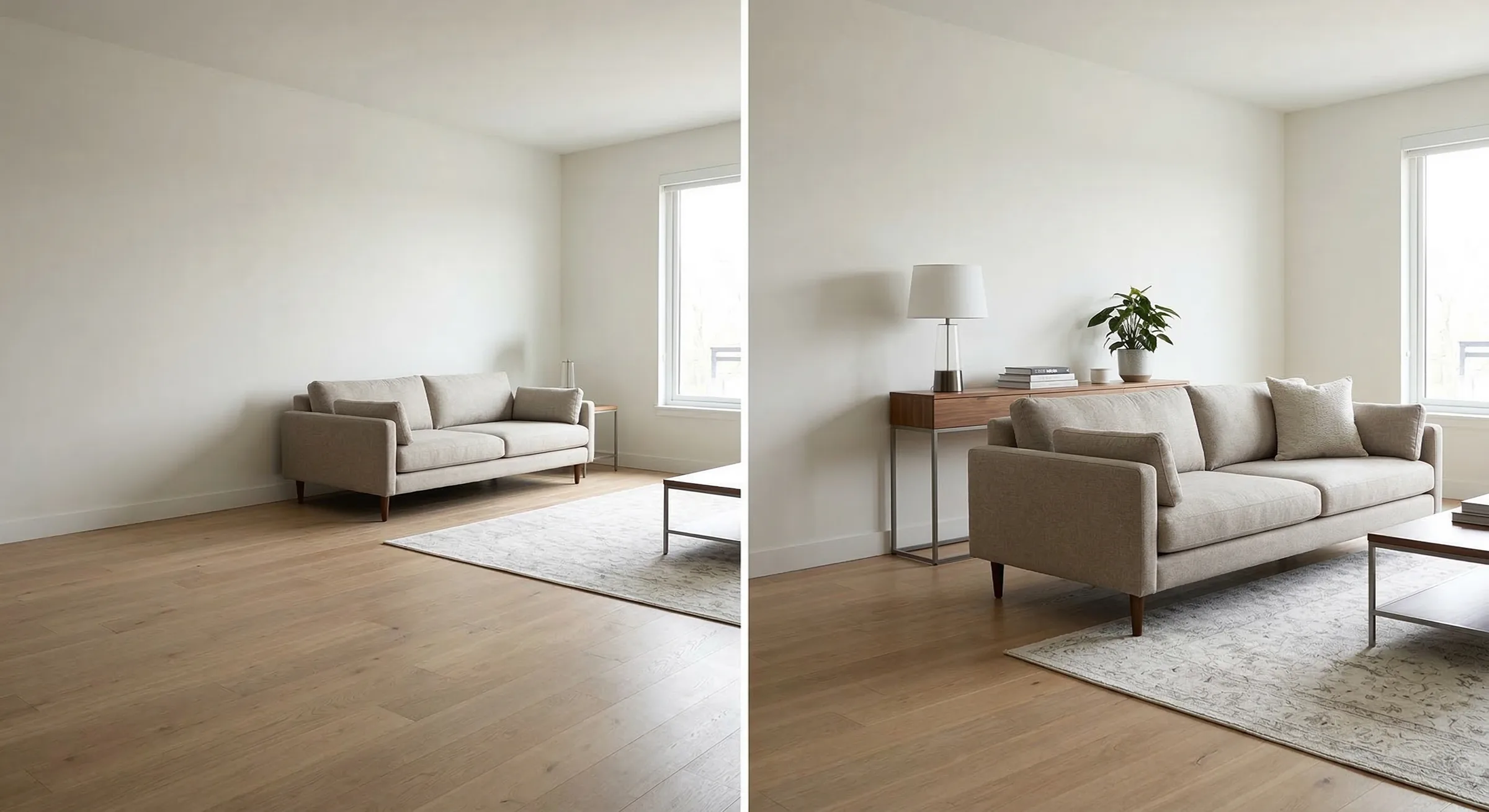
Instead of hugging the perimeter, pull your furniture away from the walls. Floating your sofa even 12 to 18 inches away from the wall creates a sense of depth and appealing shadow lines, making the room feel inherently more spacious.
Floating furniture also allows you to group seating closer together. For a comfortable conversational zone, the distance between seating pieces should be no more than 8 feet. If your chairs and sofas are 12 feet apart, people will feel like they have to shout to be heard. If you are worried about the back of the sofa looking plain, add a slim console table behind it to display books or table lamps.
Living Room Layout Planning and The Scale Illusion
Have you ever bought a beautiful armchair from a massive showroom, only to bring it home and realize it looks like a giant throne in your average-sized living space? This is known as the scale illusion. Showrooms often have 20-foot ceilings and massive square footage, which completely distorts our perception of physical scale.
To avoid this incredibly common and costly error, you must scale your furniture to the dimensions of the room, not to how it looks in the store.
- Consider visual weight: A sofa with exposed, delicate legs will appear visually lighter and take up less “perceived” space than a skirted sofa that goes all the way to the floor, even if their actual dimensions are identical.
- Match the ceiling height: Low-profile furniture works wonders in rooms with standard 8-foot ceilings, making the room feel taller. Conversely, low furniture in a room with vaulted ceilings might look miniature and out of place.
Defining Your Focal Point (And Why It Isn’t Always the TV)
Every room needs a protagonist a focal point that immediately draws the eye when you walk in. A common mistake in living room layout planning is assuming the television must dictate the entire room’s orientation.
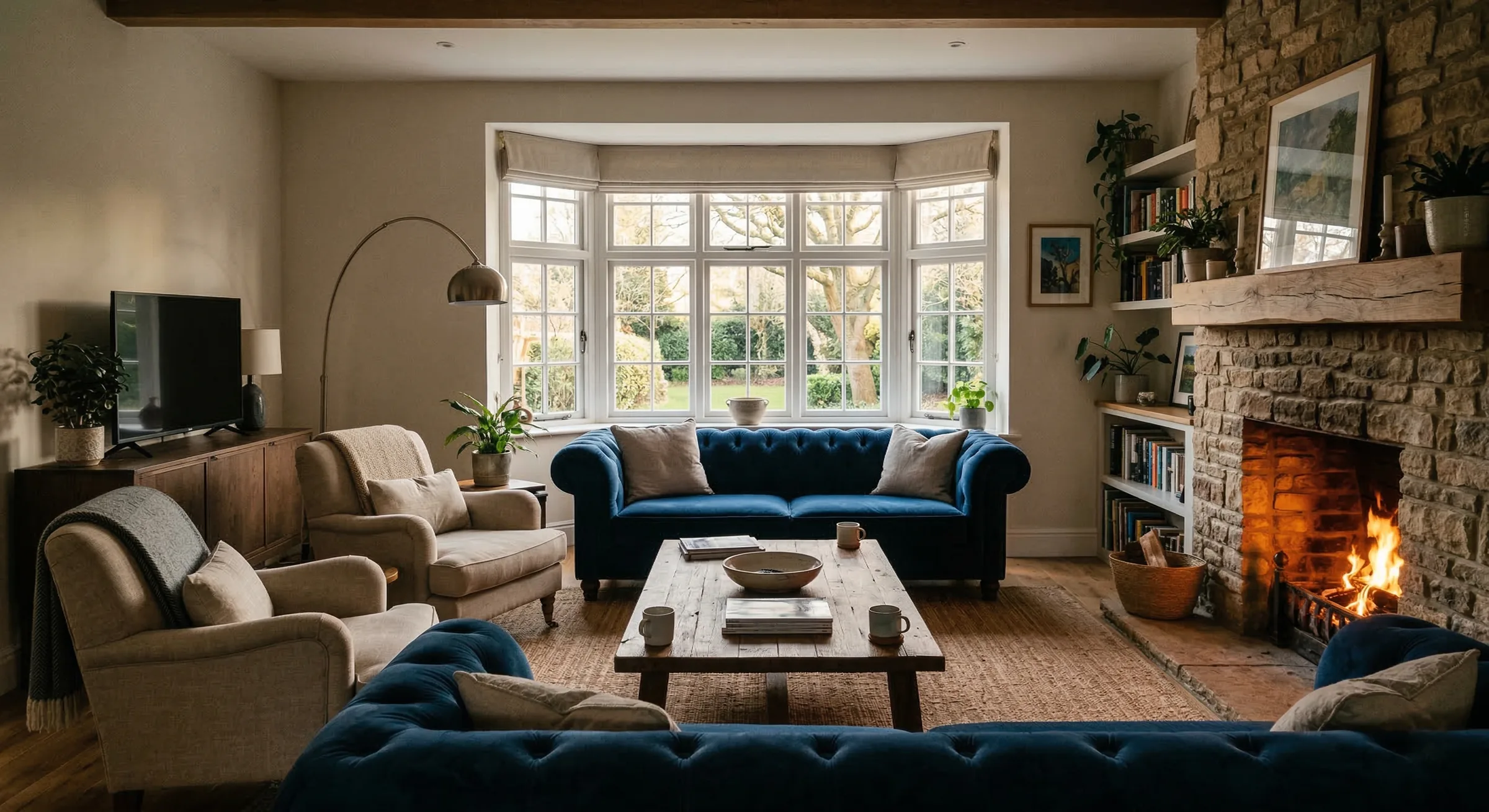
While the TV is important for functionality, orienting a room solely around a black plastic rectangle can make the space feel like a sports bar rather than a cozy sanctuary.
How to establish a strong focal point:
- Highlight architectural features: If you have a fireplace, a stunning bay window, or exposed brick, arrange your primary seating to highlight this feature.
- Create your own: If your room is a plain white box, create a focal point. This could be a large, oversized piece of artwork, an accent wall with textured wallpaper, or a beautifully styled dramatic bookshelf.
- The dual-focus solution: If you want to enjoy the fireplace and watch TV, mount the TV beside the fireplace on a swivel bracket, or place them on adjacent walls, arranging the seating in an L-shape to view both comfortably.
Rug Sizing: The Anchor of Space Optimization
If traffic flow is the highway, the area rug is the foundation of the city. A rug’s primary job in a living room is to anchor the furniture and define the specific zones of the space.
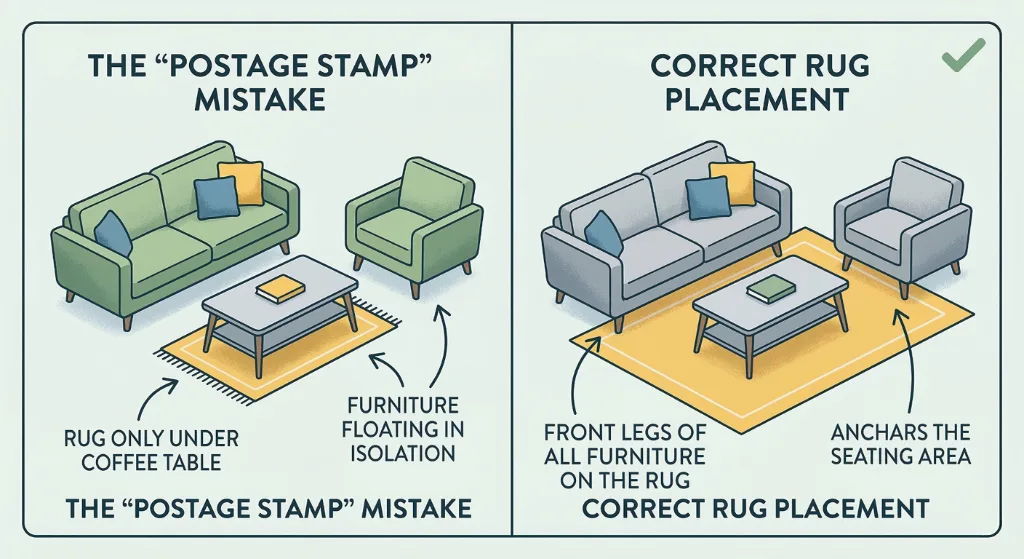
The most frequent mistake homeowners make is buying a rug that is too small, often to save money. However, a small rug (the dreaded “postage stamp” effect) visually chops up the floor, making the entire room feel disconnected and cramped.
The Golden Rules of Rug Sizing:
- All legs on: Ideally, your rug should be large enough that all four legs of your sofa and accent chairs fit comfortably on it.
- Front legs on: If the room size or budget restricts a massive rug, ensure that at least the front two legs of every major seating piece rest securely on the rug.
- Leave a border: Leave roughly 12 to 18 inches of bare floor between the edge of the rug and the walls of the room to frame the space beautifully.
Lighting as a Functional Layout Tool
When planning a layout, lighting is often treated as an afterthought. However, where you place your furniture heavily dictates where you need illumination. Relying solely on a single overhead fixture creates harsh shadows and a clinical atmosphere.
Layering Your Living Room Layout Planning Lights
To elevate your room from basic to designer-level, you must layer your lighting based on your floor plan:
- Ambient Lighting: The base layer. This includes recessed lights or a statement chandelier that provides overall illumination.
- Task Lighting: This is directly tied to your furniture placement. If you place a reading chair in a corner, it must be accompanied by a floor lamp or a wall sconce.
- Accent Lighting: Use this to highlight your focal points, such as picture lights over artwork or small uplights behind a plant.
DIY Layout Planning vs. Professional Online Design
Sometimes, a room’s architecture is so challenging—featuring too many doors, awkward angles, or radiators right where the sofa should go—that DIY methods fall short. Even with a tape measure, visualizing the final result can be overwhelming.
If you are struggling to make a space work, investing in an online interior design service is often much cheaper than making a single large furniture mistake. Here is a quick breakdown to help you decide:
| Feature | DIY Layout Planning | Professional Online Interior Design |
|---|---|---|
| Initial Cost | Free (Requires your personal time) | Affordable flat fee (High ROI) |
| Accuracy | Prone to scale, proportion & measurement errors | 3D rendering ensures a perfect, guaranteed fit |
| Problem Solving | Limited by personal experience and guesswork | Expert spatial solutions for difficult layouts |
| Vendor Access | Limited to retail stores you know | Access to trade-only brands and hidden discounts |
| Best For | Standard rectangular rooms with easy focal points | Awkward layouts, small spaces, open concepts |
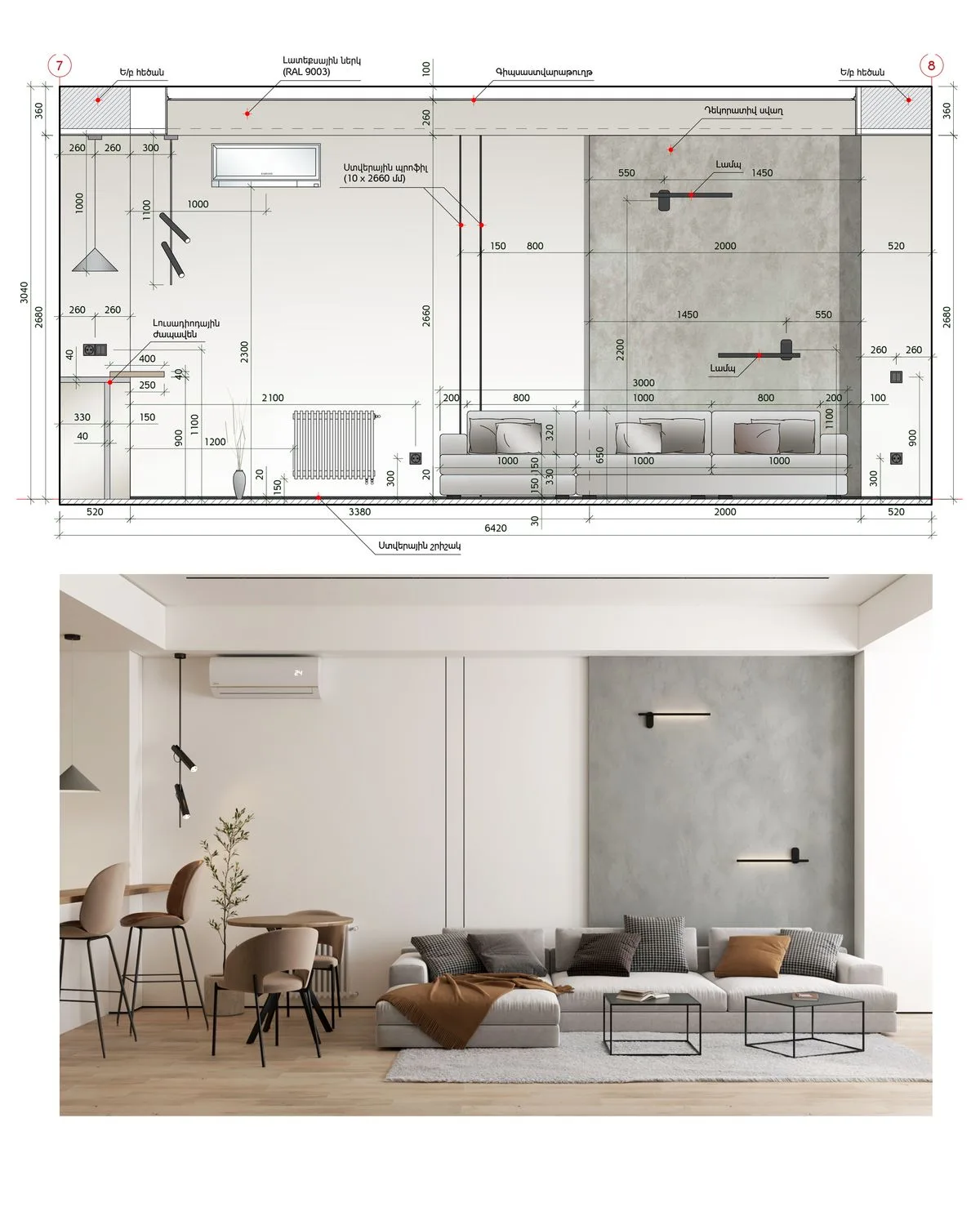
Working with a virtual designer gives you a clear roadmap. You receive an exact floor plan, a shopping list scaled to your room, and the confidence to purchase knowing everything will fit beautifully.
People Also Ask
How do you arrange furniture in an awkward living room?
Start by identifying the room’s primary focal point, such as a fireplace or a large window. Arrange your largest seating piece to face this focal point, intentionally ignoring the awkward angles of the walls. Use a generously sized area rug to define a square or rectangular seating zone within the irregularly shaped room, creating a room-within-a-room.
Where should a TV be placed in a living room layout?
Your TV should ideally be placed at eye level from your primary seated position (usually about 42 inches from the floor to the center of the screen). Avoid placing it directly opposite a bright, uncovered window to prevent glare. If your room has a fireplace, consider placing the TV on a media console adjacent to it, rather than mounting it too high above the mantel, which causes neck strain.
Does a rug make a living room look bigger or smaller?
A correctly sized rug actually makes a room look larger and more cohesive. The front legs of all major furniture pieces should rest on the rug to connect the seating arrangement. If you buy a rug that is too small, it breaks up the floor space visually, drawing the eye inward and making the room feel noticeably more cramped and chaotic.
